
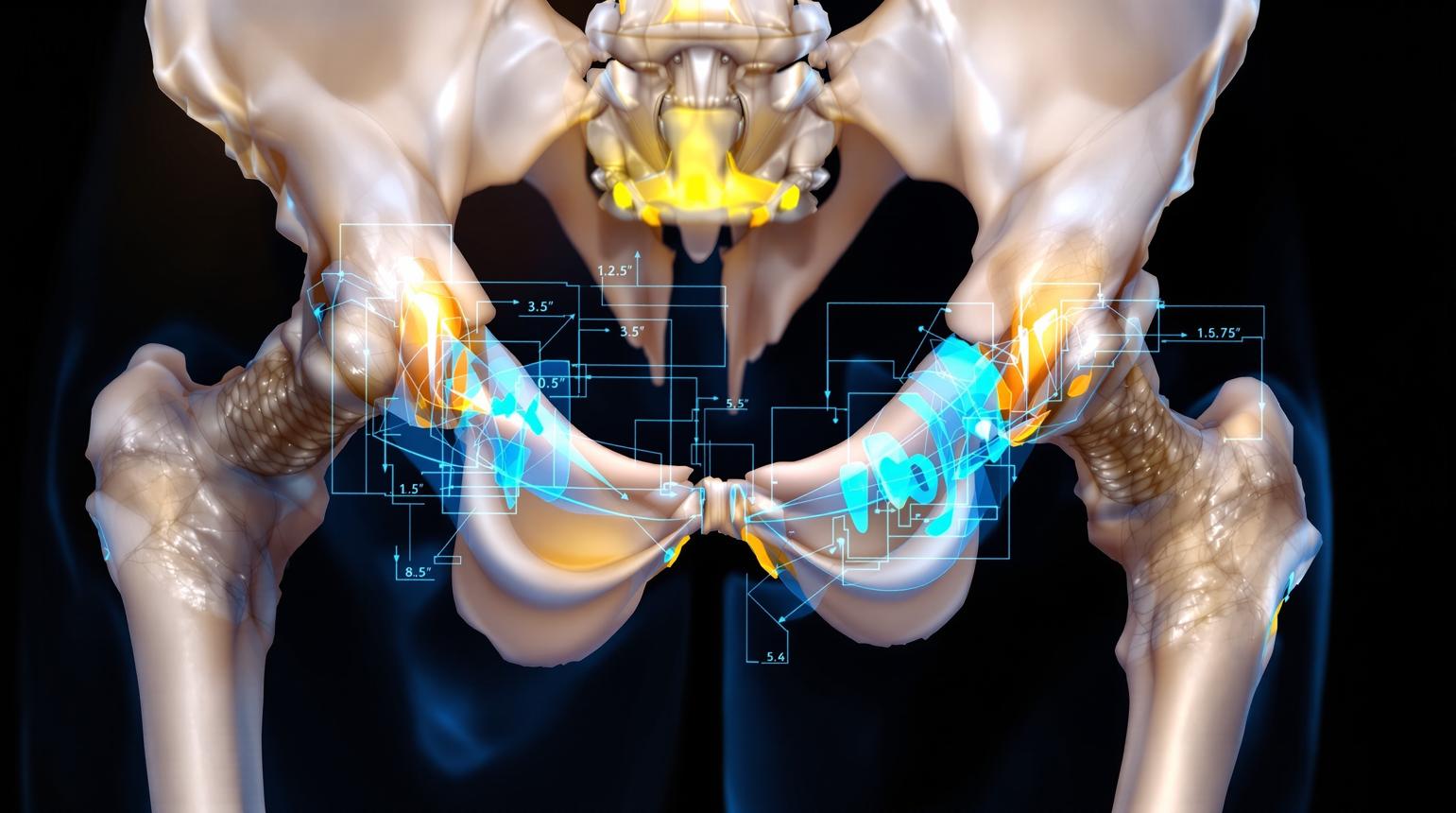
Hip pain can gradually take away the simple joys of life. Walking to the market, climbing stairs, getting out of a chair, or enjoying time with your family may become increasingly difficult. While many people delay treatment hoping the pain will improve, severe arthritis or joint damage often requires a long term solution.
Today’s advances in orthopedic surgery have made hip replacement safer and more precise than ever before. One of the biggest breakthroughs is DAA robotic hip replacement, which combines the experience of a skilled orthopedic surgeon with the precision of robotic technology. Together, they help improve surgical accuracy while preserving muscles, leading to a smoother recovery for many patients.
What Is DAA Robotic Hip Replacement?
DAA robotic hip replacement is an advanced hip replacement procedure performed through the Direct Anterior Approach while using robotic technology to assist with planning and implant positioning.
The Direct Anterior Approach, commonly called DAA, allows the surgeon to access the hip joint from the front rather than cutting through major muscles. Since the muscles are carefully moved aside instead of detached, patients often experience less tissue damage and a faster return to daily activities.
Robotic technology complements the surgeon’s expertise by providing detailed three dimensional planning and real time guidance during surgery. It helps achieve precise implant placement while the surgeon remains in complete control throughout the procedure.
Human Expertise Meets Robotic Precision
A robot does not perform hip replacement surgery on its own. Every decision during surgery is made by an experienced orthopedic surgeon.
Robotic technology serves as an advanced surgical assistant by helping the surgeon:
- Create a personalized surgical plan
- Analyze each patient’s unique anatomy
- Improve implant alignment
- Maintain consistency during the procedure
- Reduce the chances of positioning errors
The surgeon’s clinical judgment, years of training, and ability to make critical decisions remain the most important factors in achieving successful outcomes. Robotic technology simply enhances those skills with greater precision.
How Does Robotic Assisted Anterior Hip Surgery Work?
Before surgery, advanced imaging creates a detailed map of your hip joint.
During the procedure, robotic software provides continuous guidance, allowing the surgeon to:
- Position implants with greater accuracy
- Maintain proper leg length
- Improve joint alignment
- Optimize hip stability
- Preserve healthy bone whenever possible
This combination of careful planning and precise execution makes robotic assisted anterior hip surgery one of the most advanced options available for suitable patients.
Robotic vs Traditional Hip Replacement
|
Feature |
Robotic Hip Replacement |
Traditional Hip Replacement |
|
Surgical Planning |
Personalized three dimensional planning |
Standard planning methods |
|
Implant Positioning |
Enhanced precision with robotic guidance |
Depends entirely on manual techniques |
|
Muscle Preservation |
Often combined with muscle sparing anterior approach |
May involve greater soft tissue disruption depending on the approach |
|
Accuracy |
Consistent implant alignment |
Varies based on surgical technique |
|
Recovery |
Many patients experience quicker early mobility |
Recovery may be longer for some patients |
|
Pain |
Often less early postoperative discomfort |
May experience more soft tissue soreness |
|
Hospital Stay |
Frequently shorter for eligible patients |
May require a longer stay |
|
Function |
Early return to daily activities for many patients |
Recovery varies between individuals |
When comparing robotic vs traditional hip replacement, it is important to remember that the surgeon’s expertise remains the most significant factor influencing long term success.
Benefits of Robotic Anterior Hip Replacement
Patients often choose benefits of robotic anterior hip replacement because it combines modern technology with a minimally invasive muscle sparing approach.
Potential advantages include:
- Greater implant positioning accuracy
- Improved joint alignment
- Smaller surgical exposure
- Better preservation of surrounding muscles
- Reduced blood loss in many cases
- Lower risk of implant malposition
- Faster early mobility
- Improved confidence during rehabilitation
- Better restoration of leg length and hip mechanics
Every patient is unique, and outcomes depend on overall health, bone quality, and the surgeon’s experience.
Why Muscle Sparing Robotic Hip Surgery Supports Faster Recovery
One of the biggest advantages of muscle sparing robotic hip surgery is that major muscles are preserved instead of being detached.
This approach may help patients:
- Walk sooner after surgery
- Experience less postoperative pain
- Regain independence faster
- Improve balance and mobility
- Reduce reliance on walking aids earlier
- Return to daily activities more comfortably
Although recovery timelines vary, preserving healthy muscles often contributes to a smoother rehabilitation process.
Who Is an Ideal Candidate for Robotic Assisted Anterior Hip Surgery?
You may benefit from robotic assisted anterior hip surgery if you have:
- Advanced hip arthritis
- Severe hip pain affecting daily life
- Limited movement despite medication and physiotherapy
- Hip joint degeneration
- Osteonecrosis
- Certain types of hip deformities
A comprehensive evaluation, including imaging and physical examination, helps determine whether this technique is suitable for your condition.
Why Choose DAA Robotic Hip Replacement?
Patients often ask, why choose DAA robotic hip replacement over conventional techniques?
The answer lies in combining two powerful advantages:
Human Expertise
An experienced orthopedic surgeon understands complex anatomy, adapts to unexpected findings, and makes critical decisions throughout surgery.
Robotic Accuracy
Robotic technology enhances planning and precision, helping achieve optimal implant positioning while supporting consistent surgical execution.
Together, they create a treatment approach that focuses on safety, accuracy, muscle preservation, and long term joint function.
Common Myths About Robotic Hip Replacement
Myth: The robot performs the surgery independently.
Fact: The orthopedic surgeon performs the entire operation. The robotic system provides guidance and precision.
Myth: Robotic surgery is suitable for everyone.
Fact: Patient selection is essential. Your surgeon will determine whether this approach is appropriate based on your condition.
Myth: Recovery is instant.
Fact: Although many patients recover faster, rehabilitation still requires commitment, physiotherapy, and regular follow up.
Myth: Technology is more important than the surgeon.
Fact: Technology supports the surgeon but cannot replace clinical expertise, experience, or decision making.
Frequently Asked Questions
Is DAA robotic hip replacement safer than conventional surgery?
When performed by an experienced orthopedic surgeon, DAA robotic hip replacement offers enhanced planning and implant positioning while maintaining high standards of patient safety.
How long does recovery take after muscle sparing robotic hip surgery?
Many patients begin walking within a day after surgery and continue improving over the following weeks. Full recovery varies depending on age, fitness, and rehabilitation.
Does robotic surgery reduce pain?
Because muscles are preserved during the anterior approach, many patients report less early postoperative discomfort compared with some traditional techniques.
What is the biggest advantage of robotic assisted anterior hip surgery?
The greatest advantage is combining precise implant placement with a muscle sparing approach, helping improve stability and recovery.
Is robotic vs traditional hip replacement always a better choice?
Not necessarily. The best option depends on your diagnosis, anatomy, overall health, and the expertise of your orthopedic surgeon.
Will the robot make decisions during surgery?
No. The surgeon makes every clinical decision. The robotic system provides real time guidance and accuracy.
Can older adults undergo DAA robotic hip replacement?
Yes. Many older adults are suitable candidates if they are medically fit for surgery. Individual assessment is always necessary.
Why is implant positioning so important?
Accurate implant positioning helps improve joint stability, restore natural movement, and may contribute to better long term outcomes.
Final Thoughts
Hip replacement has evolved significantly over the years, but technology alone is not the reason for better outcomes. The true advantage comes from combining an experienced orthopedic surgeon’s expertise with advanced robotic guidance.
DAA robotic hip replacement offers a modern, muscle sparing approach that emphasizes precision, personalized planning, and faster recovery for many patients. If persistent hip pain is limiting your quality of life, consulting an experienced orthopedic specialist can help you understand whether this advanced surgical technique is the right choice for your individual needs.