
Hip pain can slowly change the way you live. Simple activities like walking, climbing stairs, getting out of bed, or even sitting comfortably can start feeling difficult. When medications, physiotherapy, and lifestyle changes stop helping, hip replacement surgery often becomes the next step.
One of the most common questions patients ask before surgery is: Which surgical approach is better — anterior or posterior hip replacement?
The answer is not always straightforward because the right approach depends on your anatomy, lifestyle, age, activity level, and the surgeon’s expertise. Understanding how these techniques differ can help you make a more informed and confident decision.In this guide, we will break down the differences between anterior vs posterior hip replacement, explain recovery expectations, and help you understand why many patients today are exploring muscle sparing hip surgery and minimally invasive hip replacement options.
What Is Hip Replacement Surgery?
Hip replacement surgery involves removing the damaged portions of the hip joint and replacing them with artificial implants designed to restore movement and reduce pain. The difference between surgical approaches lies mainly in how the surgeon reaches the hip joint.
The two most commonly used approaches are:
Anterior Hip Replacement
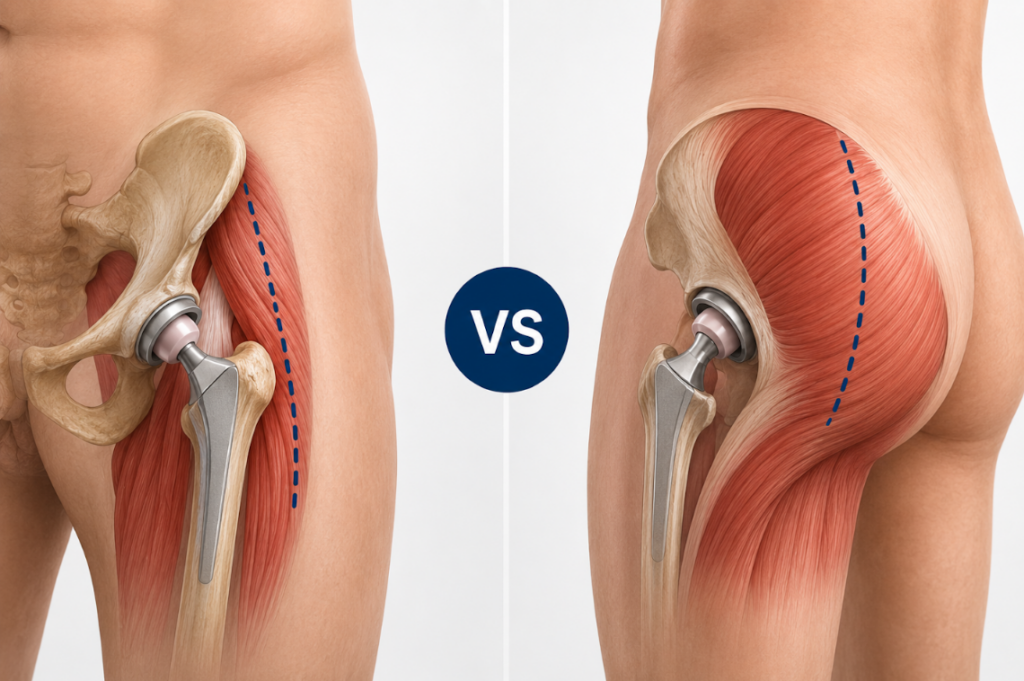
The surgeon accesses the hip joint from the front of the body.
Posterior Hip Replacement
The surgeon accesses the hip joint from the back or side of the hip. Both procedures aim to achieve the same goal: pain relief, improved mobility, and better quality of life.
Understanding Anterior vs Posterior Hip Replacement
When comparing anterior vs posterior hip replacement, the biggest distinction is how muscles and soft tissues are handled during surgery.
Anterior Hip Replacement
Anterior hip replacement is often referred to as a form of muscle sparing hip surgery because the surgeon works between muscles rather than cutting through major muscle groups. This approach has gained popularity as part of modern minimally invasive hip replacement techniques.
Key Features
Smaller Incision Placement
The incision is typically made at the front of the hip.
Muscle Preservation
Major muscles are generally not detached during surgery.
Faster Early Recovery
Many patients experience quicker mobility in the first few weeks.
Reduced Postoperative Restrictions
Some patients may have fewer movement precautions after surgery. However, anterior hip replacement can be technically demanding and may not be ideal for every patient.
Posterior Hip Replacement Explained
Posterior hip replacement is one of the most established and widely performed hip replacement techniques worldwide. In this approach, the surgeon accesses the joint from the back of the hip. Some muscles and soft tissues are detached temporarily and repaired after implant placement.
Why Many Surgeons Still Prefer It
Excellent Visibility
The posterior approach gives surgeons a broad view of the hip joint.
Versatility
It works well for a wide range of body types and complex hip conditions.
Long Track Record
This technique has decades of successful outcomes and research behind it.
Reliable Implant Positioning
Many surgeons feel comfortable achieving precise implant placement with this method. While recovery may feel slightly slower initially compared to anterior techniques, long term outcomes are often equally successful.
Hip Replacement Approaches Compared
When evaluating hip replacement approaches compared, patients should focus on more than just incision size.
Here are some important differences:
| Factor | Anterior Approach | Posterior Approach |
| Surgical Entry | Front of hip | Back of hip |
| Muscle Damage | Usually less | Some muscles detached |
| Early Recovery | Often faster | Slightly slower initially |
| Dislocation Risk | Potentially lower | Slightly higher in early recovery |
| Surgical Complexity | Technically demanding | More widely practiced |
| Suitability | Select patients | Most patients |
It is important to understand that outcomes depend heavily on surgical skill, implant positioning, rehabilitation, and patient health. A well performed posterior replacement can produce better results than a poorly executed anterior surgery and vice versa.
Is Anterior Hip Replacement Truly Better?
Many online discussions present anterior surgery as the “modern” or “superior” option. In reality, no single approach is universally better.
The Advantages Often Associated With Anterior Surgery
Faster Initial Mobility
Some patients walk independently sooner.
Less Muscle Trauma
Because muscles are preserved, early discomfort may be reduced.
Smaller Scar
The incision is often smaller and placed at the front.
Potentially Shorter Hospital Stay
Certain patients may return home sooner. However, anterior surgery also has limitations.
Potential Challenges
Limited Visibility
The surgical field can be smaller.
Risk of Nerve Irritation
Some patients experience temporary numbness near the thigh.
Not Suitable for Everyone
Patients with obesity, muscular builds, severe deformities, or previous hip surgeries may not be ideal candidates. This is why surgeon experience matters more than trends or marketing language.
Recovery Differences Between the Two Approaches
Recovery experiences vary from person to person, but there are some general patterns.
Recovery After Anterior Hip Replacement
Patients often notice:
• Easier walking in the first few weeks
• Reduced limp initially
• Faster return to basic daily activities
• Less restriction while bending or sitting
Recovery After Posterior Hip Replacement
Patients may need:
• More soft tissue healing time
• Temporary movement precautions
• Slightly longer early recovery phase
That said, by several months after surgery, many studies show similar long term outcomes between both techniques.
What Is Muscle Sparing Hip Surgery?
The term muscle sparing hip surgery refers to surgical methods designed to avoid cutting major muscle groups during hip replacement. Anterior hip replacement is one example, but not all minimally invasive procedures are automatically muscle sparing. The main goal is to reduce tissue trauma, improve comfort, and accelerate rehabilitation.
However, muscle preservation should never come at the cost of implant accuracy or surgical safety.
The Role of Minimally Invasive Hip Replacement
Modern minimally invasive hip replacement techniques focus on:
• Smaller incisions
• Less tissue disruption
• Improved pain management
• Faster rehabilitation protocols
But minimally invasive surgery does not simply mean “small scar surgery.”
A successful hip replacement depends on:
• Proper implant alignment
• Joint stability
• Long term durability
• Safe surgical execution
Patients should avoid choosing surgery based only on cosmetic factors.
Which Hip Replacement Approach Is Right for You?
The best approach depends on several factors:
Your Body Type
Certain anatomical structures may favor one technique over another.
Your Lifestyle
Athletes or highly active individuals may have different recovery goals.
Existing Medical Conditions
Bone quality, arthritis severity, or prior surgeries can influence surgical planning.
Surgeon Expertise
The surgeon’s experience with a specific technique often matters more than the technique itself. A personalized consultation and detailed imaging evaluation are essential before deciding.
Questions You Should Ask Your Surgeon
Before surgery, consider asking:
• Which approach do you perform most frequently?
• Why do you recommend this approach for me?
• What is the expected recovery timeline?
• What are the risks specific to my case?
• Will I require movement restrictions after surgery?
Clear communication can help you feel more prepared and confident.
Takeaway
Choosing between anterior vs posterior hip replacement is ultimately about finding the safest and most effective option for your individual needs. Both approaches can provide excellent pain relief and restore mobility when performed correctly. While muscle sparing hip surgery and minimally invasive hip replacement techniques continue to evolve, the best results still come from careful surgical planning, proper rehabilitation, and experienced hands.
If you are exploring hip replacement approaches compared, focus less on trends and more on long term outcomes, recovery goals, and expert medical guidance. The right surgical approach is the one that helps you return to daily life with confidence, comfort, and improved movement.